

The Art of Traction: Off-Road Mastering with Four Corner Tires
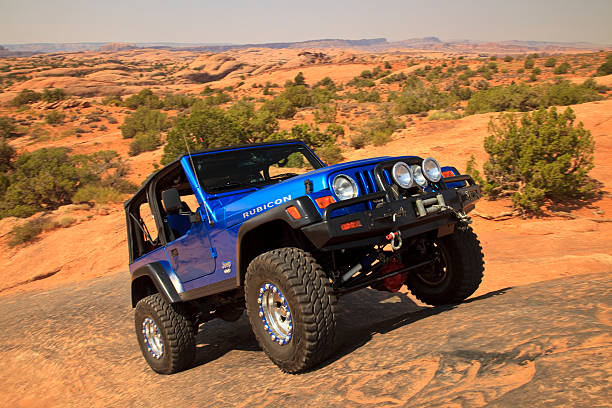
In the rugged, sun-scorched terrain of Moab or similar slickrock environments shown in the image, the concept of Four Corner Tires transitions from a maintenance suggestion to a survival necessity. The vehicle pictured—a highly modified Jeep Wrangler Rubicon (TJ model)—is an apex predator of the off-road world, and its performance is entirely dependent on how its four corners interact with the uneven, high-friction sandstone surface. For a short-wheelbase rock crawler, the tires are the primary interface for torque, stability, and articulated movement.
Beadlock Technology and Low-Pressure Grip
Looking closely at the wheels in the image, you’ll notice the silver rings with blue bolts. These are Beadlock Wheels, a critical fourcornertires.com component of a professional “Four Corner” off-road setup. Standard wheels rely on air pressure to “seat” the tire bead against the rim. However, to gain maximum traction on steep rock faces, off-roaders often “air down” their tires to incredibly low pressures (sometimes as low as 5 to 8 PSI).
At these pressures, a standard tire would likely slip off the rim. Beadlocks mechanically clamp the tire to the wheel, allowing the rubber to deform and “wrap” around rocks like a soft glove. This increases the contact patch significantly across all four corners, providing the friction necessary to crawl up inclines that would be impossible at street-legal pressures. Maintaining identical pressure across all four corners ensures the Jeep remains level and predictable; an imbalance of just 3 PSI can cause the vehicle to lean or “crab-walk” dangerously on a narrow ledge.
Tread Compound and Specialized Rock Crawling
The tires in the image feature an aggressive, directional-style tread pattern typical of Extreme Mud-Terrain (M/T) or dedicated rock-crawling rubber. Unlike a street tire, which is designed for longevity and fuel economy, these tires utilize a “sticky” rubber compound. This softer material is engineered to bite into the porous surface of the slickrock.
Side Biters: You can see the lugs extending far down the sidewall. These are essential when the Jeep is wedged in a “V-notch” canyon, as they allow the sidewalls at all four corners to provide forward momentum even when the main tread isn’t touching the ground.
Ejectors: The wide gaps between the tread blocks are designed to eject mud or loose stones, ensuring that every rotation presents a clean “bite” to the rock.
Leave a Reply